


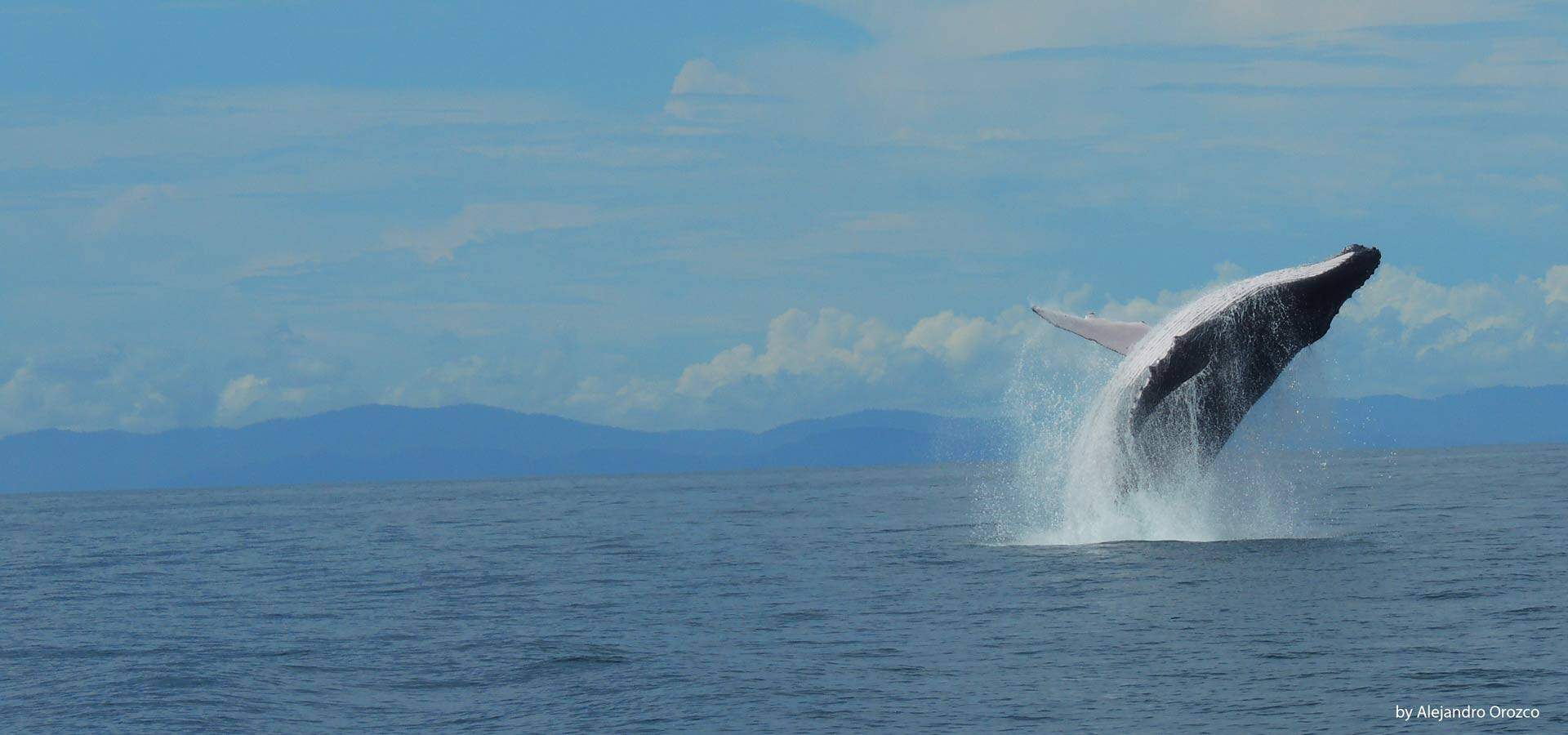
What to know about Whale Watching in Uvita, Costa Rica
Is a whale watching tour in Costa Rica worth a trip?
The warm waters off Costa Rica’s Pacific Coast welcome thousands of migratory whales every year. At least 20 whale species and accompanying marine life can put on quite a show.
Fun fact: Costa Rica has the longest humpback whale season in the world, giving visitors a better-than-average chance at siting one of these giants. The country falls along the migration path of both northern and southern humpback whales. Whales come here to live, breed, and raise their young. Often, migration pauses for the babies to rest in bays along the coast. Lucky visitors may be treated to watching a baby whale frolic alongside Mama.
Marino Ballena National Park, Uvita, Costa Rica
Marino Ballena National Park, Uvita, Costa Rica
One of Costa Rica’s most famous attractions is the Whale’s Tail, the beach at Marino Ballena National Park near Uvita. This national park has some of the most beautiful beaches in Costa Rica, including a unique feature of a beach shaped like a whale’s tail, formed by the union of two separate beaches.
Besides beautiful beaches along the 15 km (9 mile) coastline, there are many things to do. The park is large enough to rarely, if ever, feel crowded. Visitors can enjoy a beautiful beach day, walk through the wildlife preserve or arrange a Mangrove Tour. Birdwatch, search for iguanas, sloths, or be astounded by a turtle release, managed by the park rangers. This extraordinary national park provides more tourist attractions than just whales, which makes the tour also worthwhile when going offseason.
The Whales Follow Food and Water Temperatures
As winter cools waters in North America, the whales head to warmer waters off the Pacific coast of Central America. Simultaneously, their South American cousins 8,000 kilometers to the south are enjoying the southern hemisphere summer – slashing through clouds of plankton and krill near Antarctica opening their immense mouths to strain the food out of the water with 300 or more baleen plates. So, many northern whales migrate south and the southern whales head slightly north, once a year.
In between, the bays and inlets along the coast are perfect spots for the whales to eat, rest and take care of their young.
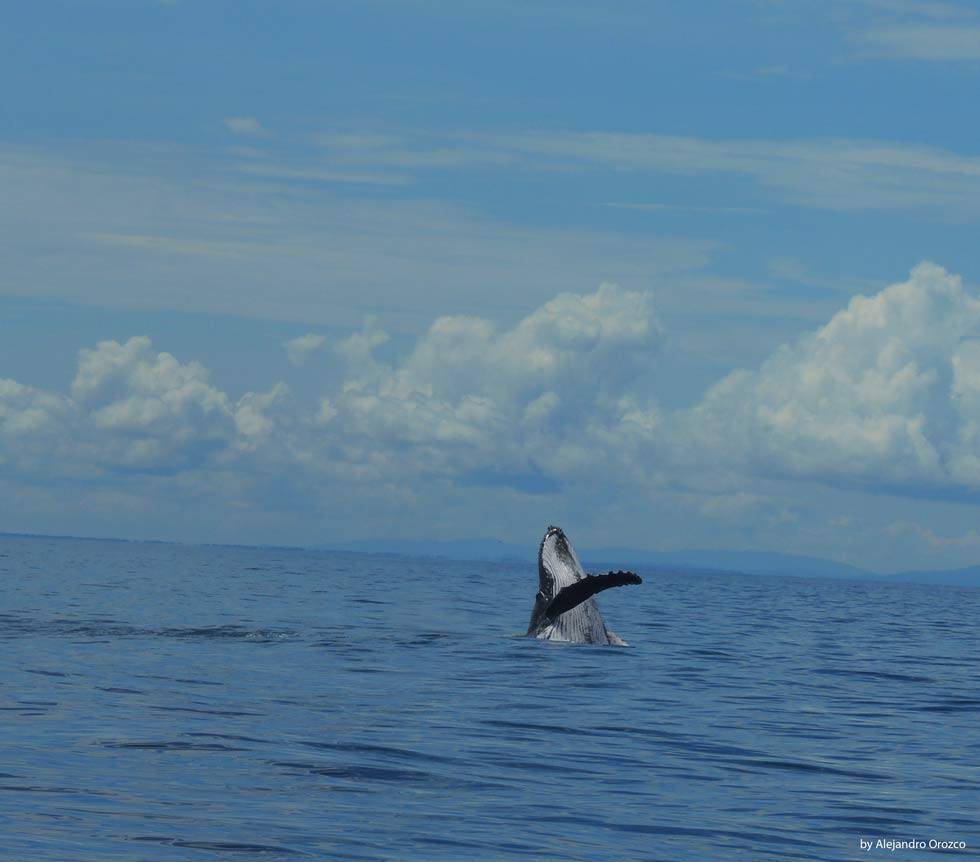
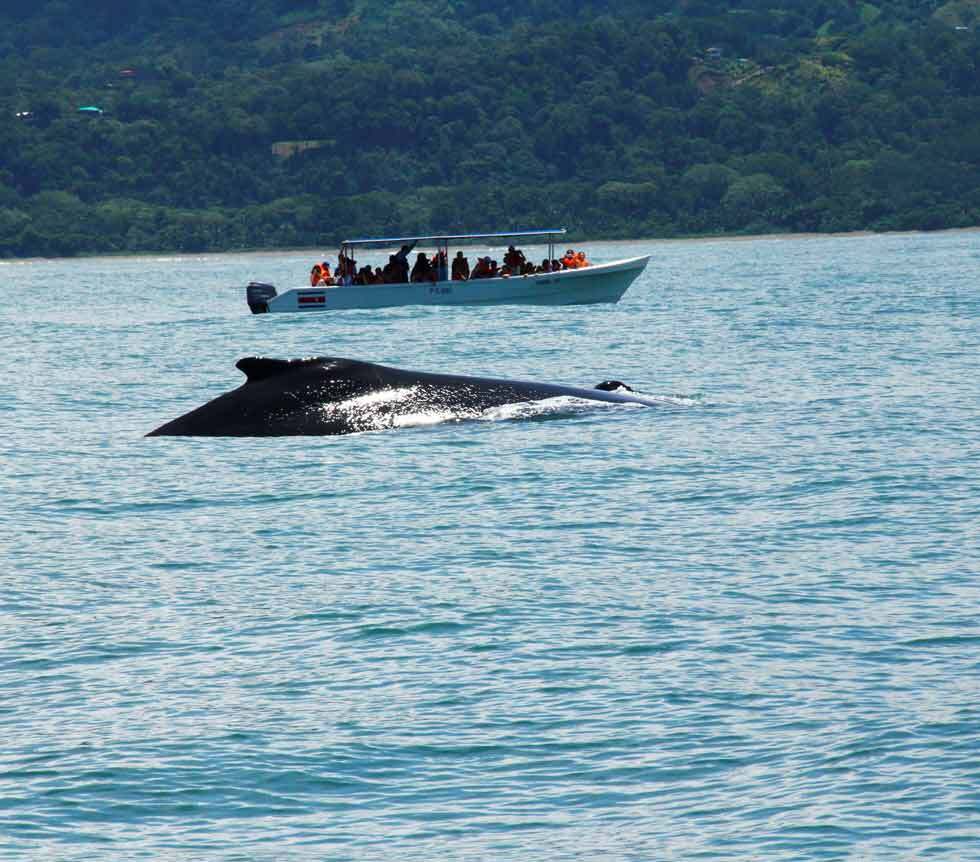
Many whale species are spotted in the area; the Humpback whales and Bryde´s whales are most common. These huge mammals can reach up to 15 meters (50 ft) long; the females are somewhat bigger than the males. Despite their enormous size, they jump out of the water providing a spectacular show for tourists lucky enough to be there at the right time. Another great experience – which is more likely to be witnessed during a tour – is watching the offspring swim and play beside the huge mother whale.
September and October are the best months for the highest chance of seeing whales during a whale watching tour in Marino Ballena, Uvita, Costa Rica.
Eco Tourism Means Being Respectful of Nature
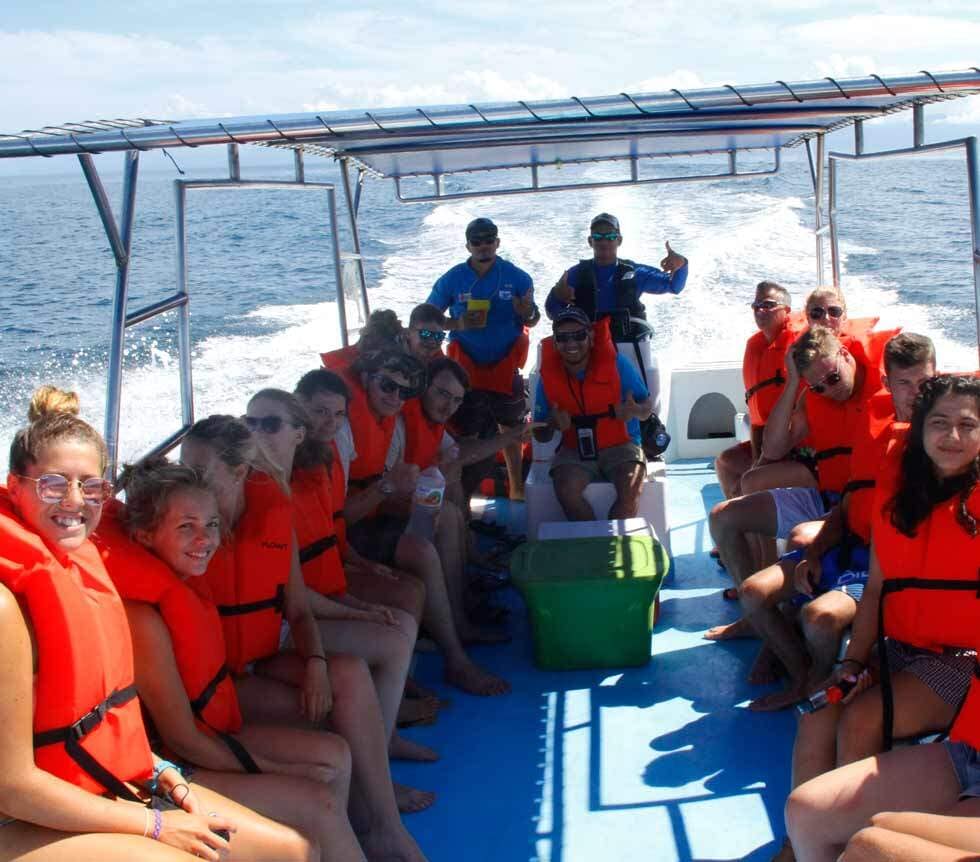
IThe best way to see the whales and all the wildlife possible is to book a tour through a tour operator in Uvita. The desk at Villas Rio Mar can help. Tour operators highlight the chance to see whales and other marine life. This includes dolphins, manta rays, and sea turtles. They make sure to mention the marine life in Costa Rica. (use this link or something similar:
Planning Your Whale Watching Trip
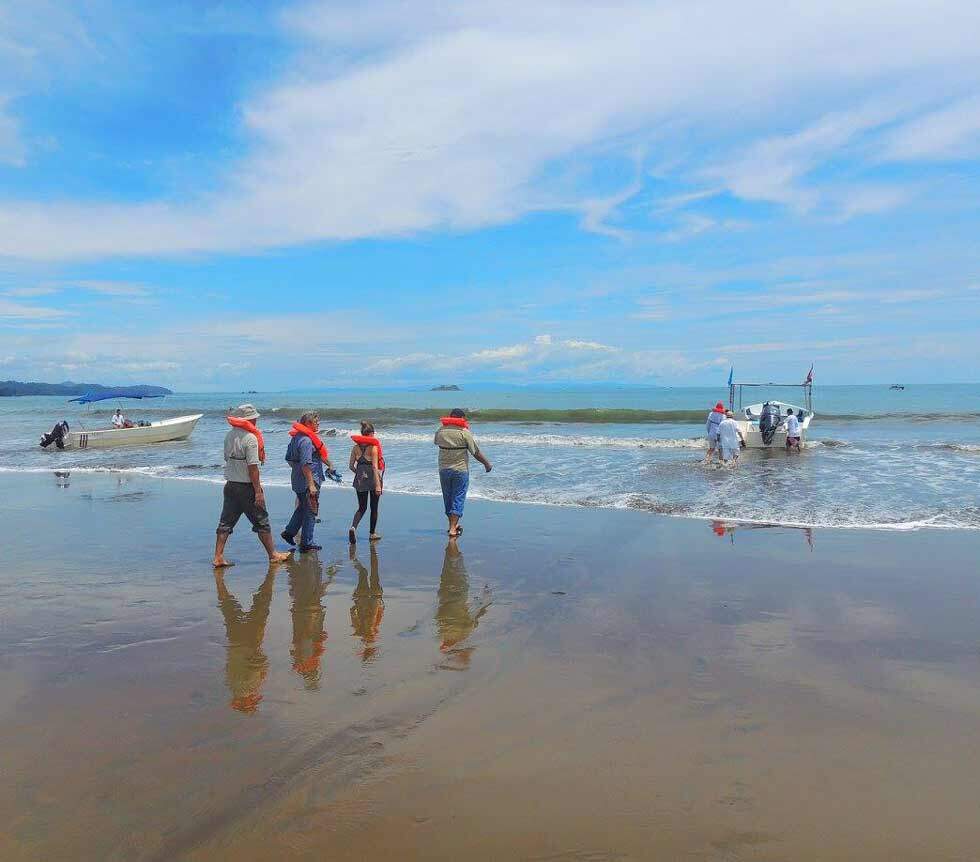
It is most convenient to stay in the area of Uvita and Dominical. Uvita, a 20-30 minute drive from Villas Rio Mar hosts several tour operators. All whale tours in Uvita visit the waters of the marine park Marino Ballena. This extraordinary national park provides more tourist attractions than just whales, which makes the tour also worthwhile when going offseason. Quite often these tours run into schools of Dolphins since several types of Dolphins are common in the park. Other fish and turtles can be spotted while snorkeling over the biggest coral reefs of Central America. And the tour also passes by beautiful beaches as Playa Piñuelas and the spectacular caves of Playa Cinco Ventanas.
Tours last 5 to 6 hours. They are designed to not disturb whales and dolphins. By going during the peak months, you get to see the amazing marine life along Costa Rica’s coast.
When to Go
The best dates are from December through April for the California Humpbacks and starting again in July when the Antarctic whales arrive to stay until about November.
Several reasons make these months great for whale watching. In January and February, whales from the North arrive. August and September see whales from the South return. This leads to amazing displays of breaching and tail slapping.
Our Front Dedk is more than happy to answer any further questions you may have regarding whale watching in Marino Ballena, Uvita, Costa Rica.
Read more articles of our Travel Blog